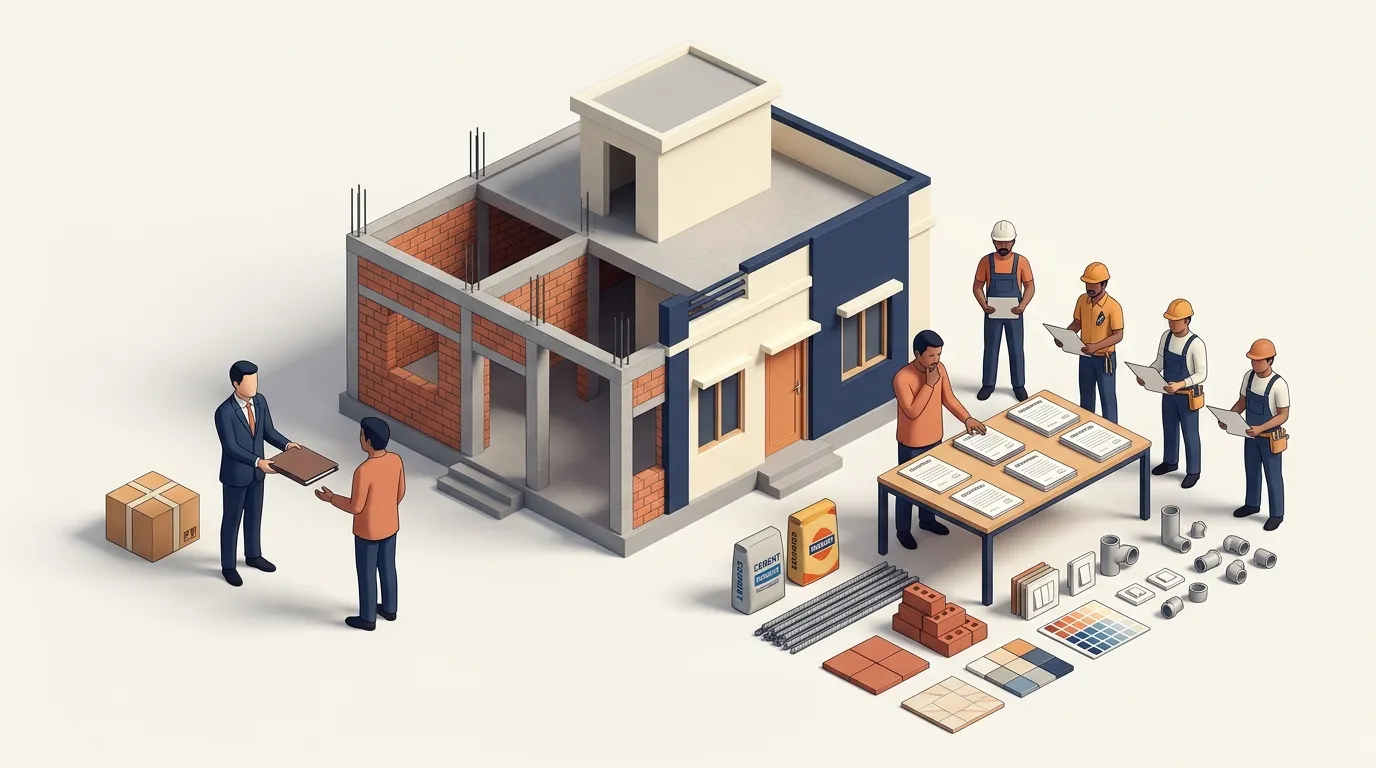
Short answer: A labour rate theka is cheaper on paper, but only works if you (or someone you trust) can be on site most days, buy material smartly and watch wastage. If you have a job, live away from the site or have never built before, a material sahit theka with a clear specification sheet usually costs less in the end, and saves your sanity.
The question every Delhi family asks
The first real decision in building a house is not the elevation or the tiles. It is this: "Labour rate pe denge, ya material ke saath?"
Your chachaji will say labour rate is the only way. "Material khud lo, tabhi pata chalega kya lag raha hai." Your colleague who just built in Dwarka will say full contract is the only way. "Kaun roz site pe jayega?"
Both are right, for their own situation. Let us break it down properly.
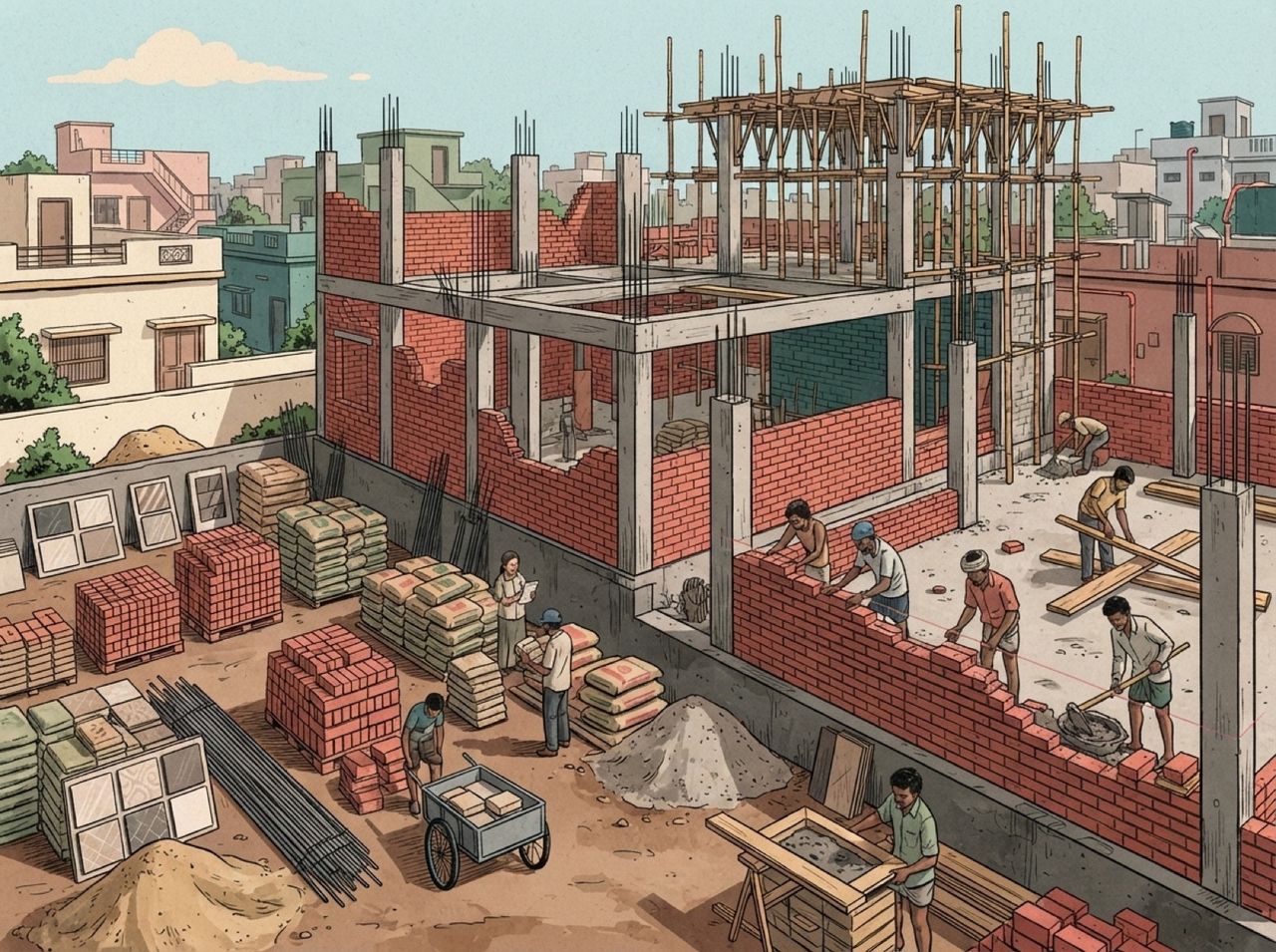
Model 1: Labour rate theka (labour-only contract)
You buy all the material: cement, sariya, bricks, sand, rodi, pipes, wires, tiles. The thekedaar brings the mistri, beldar and his tools, and charges you only for labour.
Typical rate in Delhi NCR (2026): about ₹300 to ₹500 per sq ft of built-up area for the grey structure (foundation to plaster). Finishing trades like tiling, plumbing, electrical and painting are usually charged separately, by sq ft, by running foot or by point.
Who it suits: Someone who is on site most days, understands material, has a good relationship with a local dealer, and enjoys being hands-on. Retired parents, families in the construction trade, or anyone building slowly over a long time.
What you are signing up for: Ordering material on time so labour is never sitting idle, checking quantities when trucks arrive, storing cement and steel safely, tracking wastage, and being the one who makes decisions on site, every day.
Model 2: Material sahit theka (labour plus material)
The contractor supplies both labour and material for an agreed rate. This comes in two common forms:
Per sq ft rate. One all-in rate per sq ft, for example ₹2,400 per sq ft for structure plus standard finishing.
Simple to understand, but everything depends on how clearly the specifications are written.
Item rate. A separate rate for each item of work: RCC per cubic metre, brickwork per cubic metre, plaster per sq metre, flooring per sq ft, and so on. Work is measured and paid as it is done. This is more transparent and more common for larger or custom homes.
Typical rate in Delhi NCR (2026): roughly ₹1,700 to ₹3,200 per sq ft depending on the finish level, with premium homes going higher. The contractor's margin is built into this figure.
Who it suits: Working professionals, NRIs, families living away from the plot, first-time builders, and anyone who wants one party responsible for quality and timelines.
Model 3: Turnkey
A turnkey contract is the material model taken to its end point: one party handles design, construction and finishing, and hands you the keys. It offers the least hassle, but the margin is usually the highest, and you have the least visibility into what is going into your walls unless the contract spells it out.
Side by side: labour vs material theka
| Labour rate theka | Material sahit theka | |
|---|---|---|
| Who buys material | You | Contractor |
| Upfront cost | Lower on paper | Higher on paper |
| Control over brands and quality | Full | Only as good as your spec sheet |
| Your time needed | Very high, almost daily | Low to moderate |
| Risk of wastage and theft | Yours | Contractor's |
| Risk of material price rise | Yours | Usually the contractor's, if the rate is fixed |
| Delays due to material | Common, if you order late | Rare |
| Best for | Hands-on owners living nearby | Busy families, first-time builders |
Where the money quietly leaks in each model
Neither model is cheat-proof. The leak just happens in different places.
In a labour rate theka:
- Wastage. Cement left open before rain, extra sariya "cut and thrown away", sand used carelessly. Nobody is stealing, but nobody is saving either, because it is not their money.
- Over-ordering. "Aur 50 bori mangwa lo, kam pad jayega." Leftover material quietly walks to the next site.
- Idle labour. If your truck arrives late, you still pay for a day the mistri sat waiting.
- Short deliveries. Fewer bricks or less sand than billed, if nobody is counting at the gate.
In a material sahit theka:
- Brand swaps. The agreement says a top brand of sariya, the site gets a cheaper local one. Check stamps on the bars and bags.
- Thinner sections. Fewer bars in a column, smaller diameter, less cover. Ask your engineer to check steel before every slab is cast.
- Weak concrete mix. More sand and water, less cement. Ask for cube tests on bigger pours.
- Vague specifications. "Good quality tiles" can mean ₹45 or ₹145 per sq ft. If it is not written with brand and range, assume the cheaper one.
- Extras. Things you assumed were included get billed separately later.
The common fix for both is the same: an independent engineer or supervisor checking the work at each stage, especially before slabs are cast. Concrete hides everything underneath it.
So which one should you choose?
Choose labour rate theka if you or a trusted family member can be on site most days, you know a reliable material dealer, and you are comfortable making quick decisions on the ground.
Choose material sahit theka if you work full-time, live away from the plot, are building for the first time, or simply value your peace of mind more than the last few rupees.
A hybrid works well too. Many Delhi families go material sahit for the structure, where a steady supply and skilled crew matter most, and then buy finishing items like tiles, sanitaryware and fittings themselves, where personal taste matters most.
Frequently asked questions
What is the labour rate per sq ft in Delhi in 2026? For the grey structure, typically ₹300 to ₹500 per sq ft of built-up area. Finishing labour is often charged separately.
Is labour contract really cheaper than full contract? The quote is cheaper. The final bill may not be, once you add wastage, idle labour, price rises and your own time. The gap often ends up much smaller than it looks at the start.
Can I buy only some materials myself in a material contract? Yes, many contractors agree to a hybrid. Just make sure the agreement clearly states who supplies what, so nothing falls between the two.
Kaunsa theka better hai pehli baar ghar banane walon ke liye? For first-time builders, material sahit theka with a detailed spec sheet and independent supervision is usually the safer choice.
The ThekeYaar way: material contract rates, labour contract control
We built ThekeYaar because families should not have to choose between saving money and having peace of mind.
You hire a vetted contractor at the same rates he gives builders, so there is no builder markup. If you want, we can source material for you at wholesale trade prices that are not normally available to individual buyers, and you see exactly what you are paying for. Our in-house engineers and trained coordinators supervise every stage, and you can check your site's progress, with photos, from your phone. Design and supervision cost you nothing.